Buran
Spaceplane
Overview
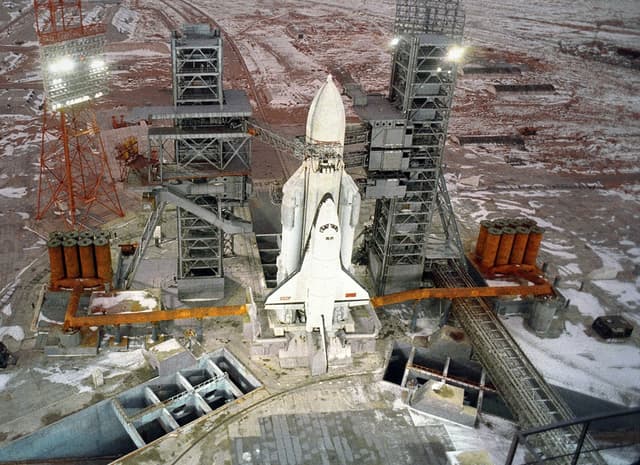
/01The Buran programme was started by the Soviet Union as a response to the United States Space Shuttle programme. The project was the largest and the most expensive in the history of Soviet space exploration. Development work included sending BOR-5 test vehicles on multiple sub-orbital test flights, and atmospheric flights of the OK-GLI aerodynamic prototype. Buran completed one uncrewed orbital spaceflight in 1988, after which it was recovered successfully. Although the Buran class was similar in appearance to NASA's Space Shuttle orbiter, and could similarly operate as a re-entry spaceplane, its internal and functional design was distinct. For example, the main engines during launch were on the Energia rocket and were not taken into orbit by the spacecraft. Smaller rocket engines on the craft's body provided propulsion in orbit and de-orbital burns, similar to the Space Shuttle's OMS pods.
Agency
Type
Maiden Flight
Crew Capacity
Flight Life
Specifications
/02Autonomously carrying cargo and crew (never achieved) to Low Earth Orbit.
Height (m)
Diameter (m)
Payload Capacity (kg)
Return Capacity (kg)
Mission Record
/03Total Launches
Successful
Failed
Spacecraft Flown
Landing Record
Attempted Landings
Successful Landings
Failed Landings